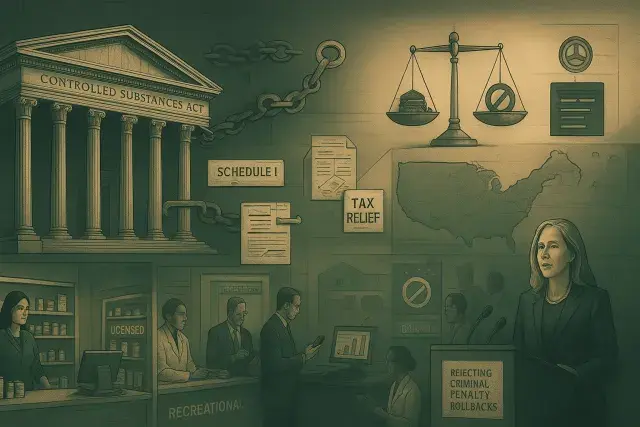
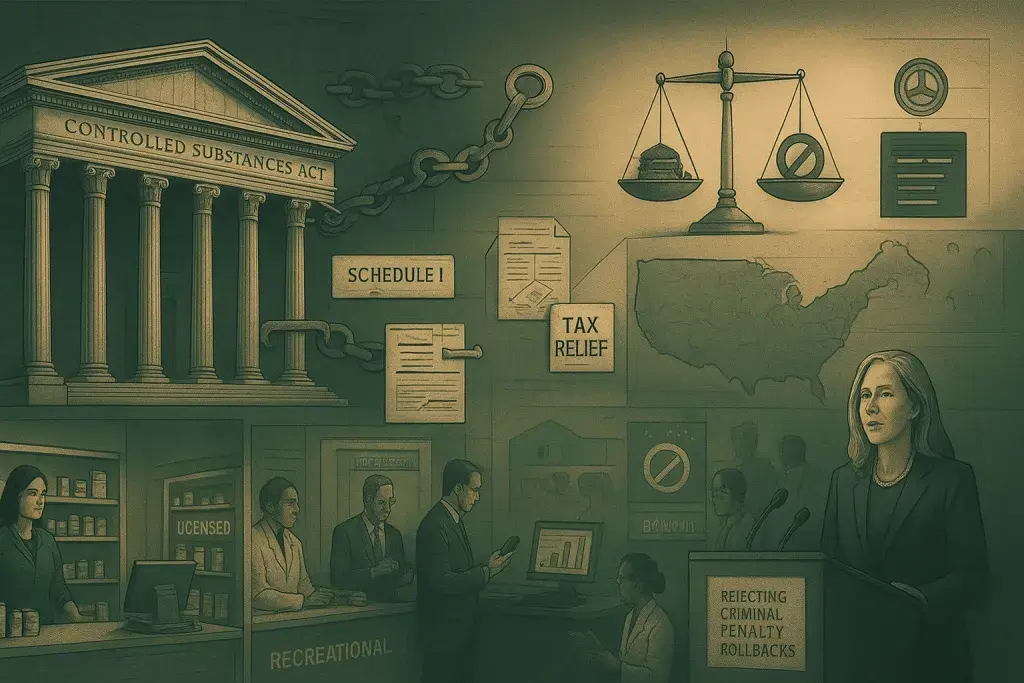
The federal government's decision to move state-licensed medical cannabis from Schedule I to Schedule III marks the most significant shift in U.S. drug policy in decades - and for licensed cannabis businesses, it carries immediate, practical consequences. But as advocates and operators are quick to point out, reclassification is not the same as legalization, and the gap between those two things still shapes nearly every aspect of running a compliant cannabis retail operation in 2025.
The distinction matters most in the tax code. Cannabis companies have long operated under the burden of Internal Revenue Code Section 280E, which - because cannabis remained a Schedule I controlled substance - denied them standard business deductions available to virtually every other U.S. industry. Payroll, rent, marketing, point-of-sale infrastructure: none of it deductible. Reclassification to Schedule III clarifies that medical cannabis businesses can now access those deductions, a meaningful change for operators already running on compressed margins. That kind of structural tax relief has been a priority for licensed retailers from Virginia to California, and it echoes conversations operators and vendors have been having in markets like New York, where a pos system for dispensary new york carries real capital cost that, until now, offered no offsetting tax benefit under federal rules. The deductibility question isn't abstract - it hits the income statement directly.
Here's the catch, though. Schedule III status applies only to cannabis products that exist within a state's authorized medical cannabis program. Everything outside that tightly defined boundary - adult-use products, unregulated inventory, anything sold outside a licensed medical framework - remains Schedule I. Recreational cannabis, which accounts for the majority of retail volume in states with adult-use programs, doesn't move. That means most dispensary operators, particularly those running dual-use or adult-use-only stores, should not assume the 280E burden has simply disappeared. Operators and their accountants will need to examine exactly which product lines and revenue streams qualify under the new framework, and which don't.
Virginia's Retail Delay Feeds the Illicit Market
Separate from federal reclassification, Virginia is working through its own, more immediate crisis. The state has legalized cannabis possession and home cultivation, but retail sales have remained stalled - a gap that has measurably expanded the illicit market. Governor Abigail Spanberger's proposed legislative changes would have added another 14 months to that delay while also reinstating criminal penalties for conduct that had already been decriminalized. Lawmakers rejected both measures.
The criminal penalty rollback was, to put it plainly, a nonstarter for most in the advocacy and business communities. Reinstating misdemeanor or felony exposure for cannabis-related conduct - after the state had already moved away from criminalization - would have created serious confusion for law enforcement, consumers, and retailers trying to build compliant operations. For any operator anticipating a Virginia retail license, criminal exposure adjacent to the same product they're licensed to sell creates liability exposure that compliance counsel cannot easily paper over.
The delay question is arguably more consequential for the licensed supply chain. Every month that retail sales don't open is another month that cultivators, processors, and distributors holding licensed inventory can't move product through legal channels. Wholesale pricing pressure builds. Product batches age. The illicit market - which faces none of the compliance costs, lab testing requirements, or excise tax obligations of licensed operators - keeps the consumer base that a functioning regulated market needs to be viable.
What Reclassification Actually Changes for Researchers and Operators
Beyond the 280E relief, reclassification carries a less-discussed but real benefit for the research side of the industry. Previously, researchers working with state-authorized medical cannabis products faced federal legal exposure even when operating within state law. That deterrent effect pushed academic and clinical research toward products that didn't reflect what patients and consumers were actually using - compromising the quality of any findings. Under Schedule III, that conflict is largely resolved for medical program participants.
For dispensary operators, that's a longer-term business implication than it might first appear. Better research on medical cannabis products supports the kind of evidence base that regulators use when writing rules around dosing guidance, labeling requirements, and product safety disclosures. Compliant packaging and accurate labeling have always been operational priorities for licensed retailers, and clearer research backing gives product developers and compliance teams more to work with when building out their SKU catalogs and consumer education materials.
The Bigger Picture: Descheduling Remains the Real Goal
Reclassification is real progress. It is not, however, a resolution of the fundamental tension between state cannabis programs and federal prohibition. As long as cannabis appears anywhere on the Controlled Substances Act, states cannot set independent cannabis policy free from the threat of federal preemption. Banking access remains restricted. Interstate commerce remains prohibited. Multi-state operators continue to structure around federal constraints that their counterparts in any other retail category simply don't face.
The position of advocates - that full removal from the Controlled Substances Act is the only adequate solution - reflects the operational reality licensed businesses deal with daily. Rescheduling helps. It does not solve the core compliance architecture problem. Until that changes, dispensary operators, their investors, and their technology and payments vendors will continue building businesses inside a regulatory structure that was never designed to accommodate them.