A one-vote procedural fight in the Senate has, for now, preserved a short reprieve for the intoxicating hemp industry - but the underlying federal deadline that could reshape retail shelves nationwide is still coming. Sen. Ted Budd, R-N.C., tried and failed last week to strip a 30-day delay out of the Senate's continuing resolution, a delay that pushes the effective date of sweeping new hemp THC restrictions from Nov. 12 to Dec. 11. Senators voted 61-32 to table his amendment, meaning the underlying law Congress passed in November 2025 - which redefines hemp based on total THC and caps finished products at 0.4 milligrams of combined THC and similar cannabinoids per container - is now on a slightly longer runway, but still very much live.
For retailers and compliance teams, that runway matters more than the topline vote count. Whether the cutoff lands in November or December, operators selling hemp-derived beverages, gummies, vapes, delta-8 products, or THCA flower are staring down a hard compliance deadline that will force SKU-level decisions across wholesale menus and store shelves. Multi-state operators and single-location shops alike are already reviewing batch inventory, COAs, and supplier contracts to figure out what survives a 0.4-milligram threshold and what doesn't. States with mature cannabis regulatory infrastructure offer a useful comparison point here - South Dakota, for instance, runs licensed cannabis retail through South Dakota seed-to-sale dispensary software that tracks potency, batch testing, and inventory movement in ways the largely unregulated hemp market has never had to replicate. That gap in tracking infrastructure is precisely what's fueling the federal fight.
Budd's argument, delivered on the Senate floor and repeated in a pointed post-vote statement, centered on child safety: bright, candy-mimicking packaging, easy convenience-store access, and North Carolina emergency-room data showing a steep rise in cannabis-related visits among minors. His 14 cosponsors crossed party lines, from Thom Tillis to Kirsten Gillibrand, which tells you this isn't a clean partisan split. Neither is the opposition. Twenty-one Republicans and 11 Democrats voted against tabling the amendment, and the fight reportedly spilled into a tense closed-door GOP lunch where White House legislative affairs staff told senators flatly there would be no further extension beyond December.
Why the White House Wanted the Delay
The administration's position, articulated publicly by CMS Administrator Dr. Mehmet Oz, wasn't really about protecting gas-station THC drinks. Oz argued the broader restrictions could disrupt CMS efforts to expand access to full-spectrum hemp-derived CBD for seniors and people with disabilities - a narrower, arguably more defensible policy goal that got tangled up in the same statutory language covering intoxicating products. Budd pushed back hard on that framing, asking why medical CBD access requires keeping THC-infused snacks on convenience-store racks. It's a fair question, and it exposes a real drafting problem: the 2025 law's THC threshold sweeps broadly enough to catch both categories in the same net.
What Operators Should Actually Watch
The coalition opposing Budd's amendment - 105 organizations including the US Hemp Roundtable, the National Association of Convenience Stores, and several North Carolina hemp groups - wasn't defending the status quo so much as buying time. Their argument: use the 30-day window to pass real regulation covering good manufacturing practices, synthetic cannabinoid imports, and age-verification requirements, rather than let a blunt THC cutoff wipe out large swaths of inventory overnight. That's a reasonable ask on paper. In practice, though, Congress has shown little appetite for fast-tracking a replacement framework, and operators betting on further delay are gambling with compliant packaging redesigns and wholesale contracts they may need to unwind on short notice.
The North Carolina Mirror Fight
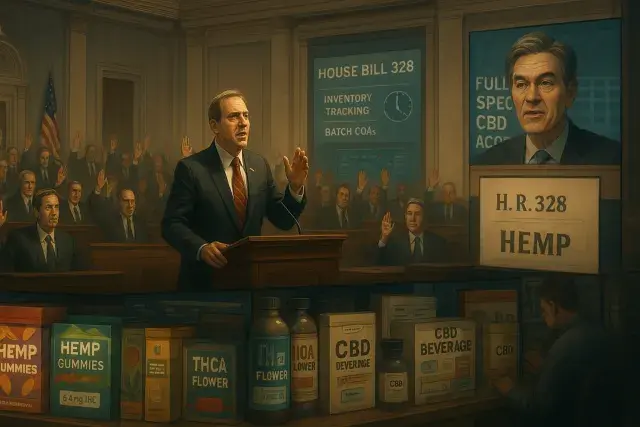
Meanwhile, North Carolina's own version of this fight - House Bill 328 - sits stalled in the House Rules Committee despite clearing the Senate 37-6. The bill would write the same 0.4-milligram limit directly into state law, meaning it would survive even if Congress delays or waters down the federal standard. House Speaker Destin Hall says a smaller working group will keep negotiating before year's end, but for now retailers in the state face the same unresolved question haunting the national market: age limits and testing requirements, or an effective ban dressed up as a THC threshold. Either way, the compliance clock is running.