
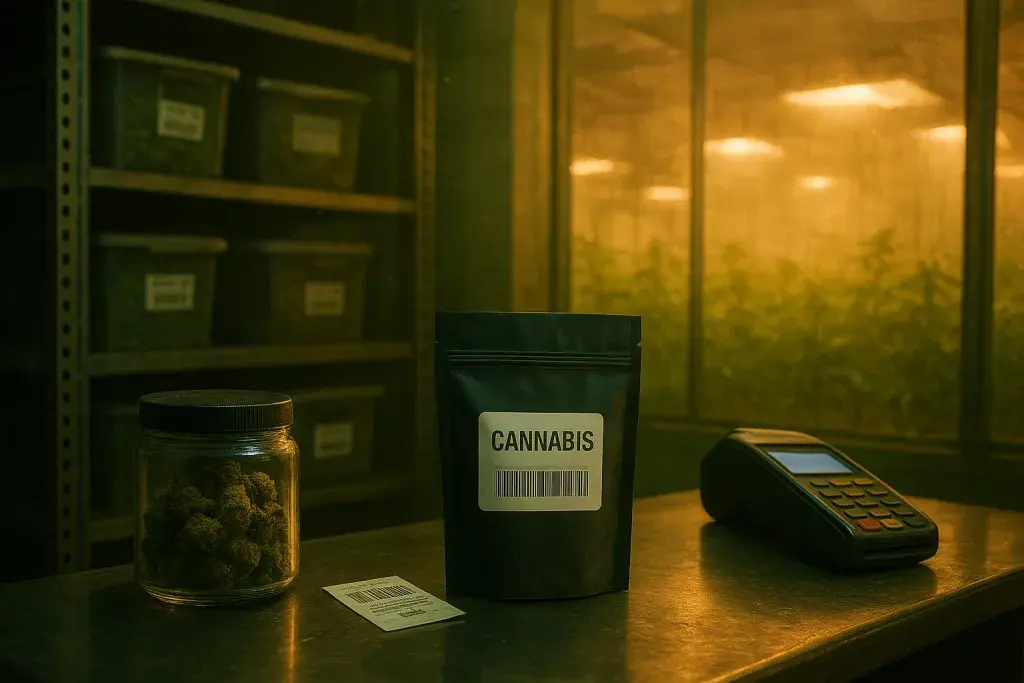
A new medical cannabis dispensary is set to open in Bowling Green, Kentucky on June 5, adding licensed retail capacity to a part of the state that has been underserved since Kentucky's medical cannabis program began rolling out. Speakeasy Dispensary, operating under Gold Leaf Management, will open at 2708 Scottsville Rd., Suite A - positioning itself as a regional anchor for registered patients across South Central Kentucky who have had few nearby options for compliant product access.
Why Location Choice Matters in an Early-Stage Medical Market
Bowling Green isn't an arbitrary pin on the map. As CEO Casey Flippo noted in the company's release, the city functions as a significant economic and population hub for this part of the state - which, in practical terms, means it draws patients from a broad surrounding radius. In early-phase medical markets, geographic gaps in dispensary coverage aren't just inconvenient; they actively suppress patient enrollment. When registered patients face long drives to reach a licensed facility, a meaningful portion simply won't make the trip consistently. That undermines both program participation numbers and, ultimately, the case for market expansion.
For operators evaluating site selection in emerging state programs, this kind of regional-hub logic is worth internalizing. The first licensed dispensary to anchor a mid-sized metro with limited competition can establish patient relationships - and the corresponding purchase history, loyalty, and repeat traffic - that are difficult for later entrants to displace. The site at Scottsville Rd. puts Speakeasy well within reach of surrounding counties that may not see their own licensed retail for some time.
Opening Weekend Patient Drive Addresses Enrollment, Not Just Foot Traffic
One of the more operationally interesting moves here is the on-site patient drive scheduled for June 5 and 6, running 11 a.m. to 7 p.m. both days. Rather than simply opening doors to existing cardholders, Speakeasy is actively working to expand the patient pool - hosting licensed providers on-site so that individuals without a current medical cannabis card can complete their medical evaluation, notary services, and state application submission in a single visit, at a low cost.
That's not a trivial logistical undertaking. Coordinating a licensed provider, notary, and state submission workflow on-site during a retail launch weekend requires real operational planning. But the upside for the operator is clear: converting prospective patients into registered cardholders at the point of first contact is far more efficient than waiting for that population to self-enroll over months.
For the broader Kentucky program, this kind of activation matters. Medical cannabis programs tend to build slowly in their early phases, partly because patients are unfamiliar with the enrollment process, partly because access to certifying providers can be limited, and partly because stigma still deters some qualifying individuals from pursuing a card. Lowering the friction at the enrollment stage - which is exactly what an on-site drive does - can meaningfully accelerate program participation rates.
Product Availability Will Reflect Where Kentucky's Supply Chain Actually Stands
The dispensary will carry medical cannabis products currently approved and available within Kentucky's program, with the expectation that selection will expand as additional licensed cultivators and processors come online. That's an honest framing of where the state's supply infrastructure sits right now.
Kentucky's medical cannabis framework has been in a phased implementation, with business licensing activity accelerating in recent months. But the reality for any dispensary opening in this environment is that SKU depth will be constrained early on. Wholesale menus are thinner when fewer cultivators and processors hold active licenses; product categories that patients may be familiar with from other states may not yet be available locally. Operators need to manage patient expectations accordingly - and invest in budtender training that reflects what's actually on the shelf, not what the program may eventually support.
This is also where compliance infrastructure becomes a daily operational concern. Kentucky's regulated program requires seed-to-sale tracking, compliant packaging, and proper documentation across every product batch. For a dispensary serving patients - many of whom may be new to regulated cannabis retail entirely - maintaining accurate point-of-sale records, verifying patient registry status at each transaction, and ensuring all products carry the appropriate state-required labeling isn't optional. It's the baseline.
What This Opening Signals for Kentucky's Regulated Market
The Bowling Green opening is a concrete indicator that Kentucky's medical program is moving from regulatory framework to functioning retail market. That transition is rarely linear. Early openings in any new state program tend to expose supply gaps, patient-education shortfalls, and operational learning curves - none of which reflect poorly on the program in the long run, but all of which require operators to be adaptable in year one.
For suppliers, software vendors, and ancillary businesses watching Kentucky: a new dispensary in a regional hub with an actively engaged operator is a meaningful signal. The market is real. The patient base is forming. And operators who invest in compliant infrastructure, patient enrollment support, and regional relationships now are building durable positions in a market that will look considerably different in two or three years.
Appointments for the opening weekend patient drive are available through Speakeasy's designated booking system.