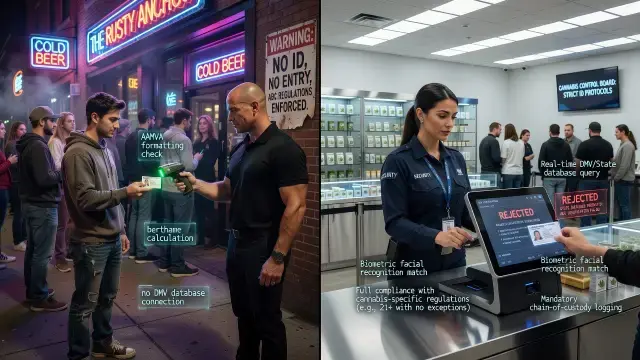
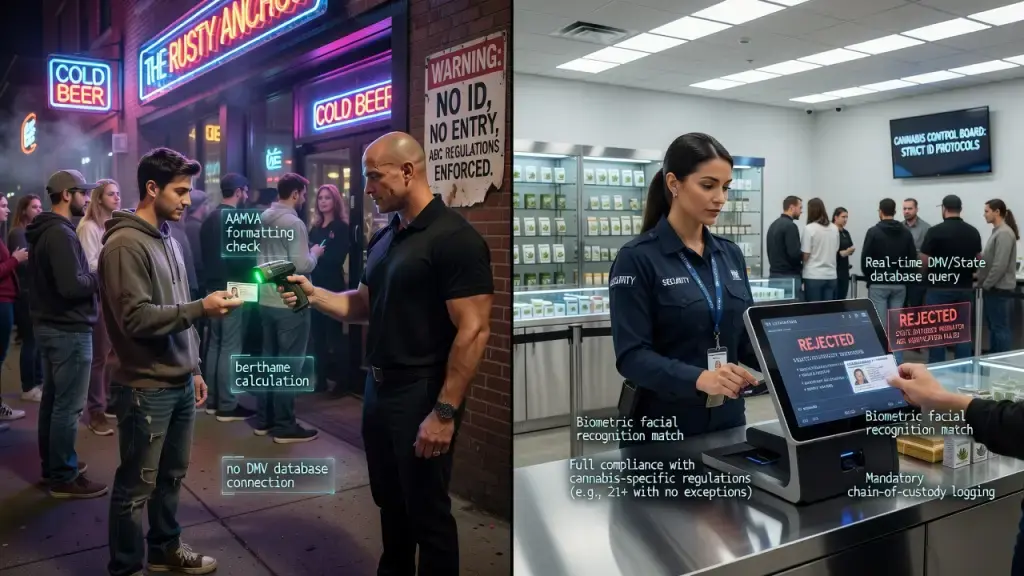
A driver's license that breezes past the doorman at a crowded bar can get flatly rejected at a cannabis dispensary's front counter, and the reason has little to do with customer service. It comes down to regulatory exposure. Bars answer to Alcohol Beverage Control agencies with tiered penalty structures; dispensaries answer to state cannabis regulators who treat a single underage sale as grounds for license revocation. That gap in consequences shapes two completely different approaches to identity verification hardware.
Liability Drives the Hardware Decision
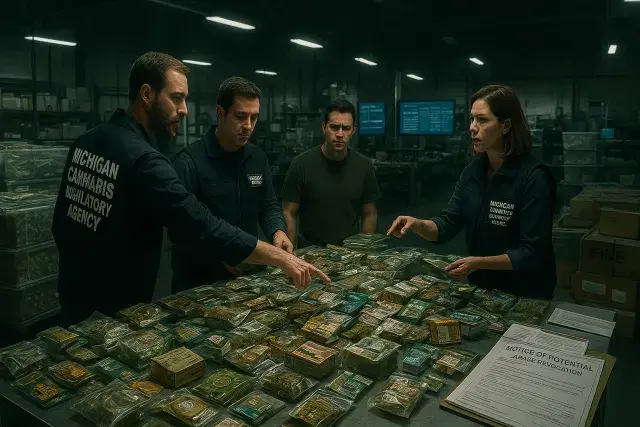
A tavern that serves a minor typically faces a fine or a short suspension - painful, but survivable. A licensed cannabis retailer caught in the same situation risks losing its license outright, along with the inventory sitting in the budroom and on the shelves. Every unit of product in a dispensary is tied to a state-mandated seed-to-sale tracking system, such as METRC, which means a compliance failure doesn't stay contained to one bad transaction. It cascades through inventory records, tax filings, and the retailer's standing with the licensing authority. Operators facing that kind of downside don't gamble on a barcode reader built for speed. They buy forensic-grade equipment, because the math on the risk side simply doesn't allow for shortcuts.
Barcode Reading Versus Document Forensics
Here's the mechanical difference. Hospitality scanners read the PDF417 barcode on the back of a license, check that the text matches AAMVA formatting standards, and calculate age from the encoded birthdate. That's it. The device never talks to a DMV database, never inspects the card itself, and has no way of knowing whether the plastic in someone's hand is a government-issued document or a well-made imitation. If the barcode parses, the light turns green.
Dispensary-grade scanners do something else entirely. They capture the card under visible, infrared, and ultraviolet light, checking for the fluorescent inks and microprinting that only authentic state-issued IDs carry. They evaluate the physical substrate, distinguishing genuine polycarbonate from PVC counterfeits. And they cross-match the printed data on the front against the barcode on the back, flagging any mismatch instantly. That's three to five seconds of forensic review versus a half-second barcode check - not a trivial difference when a license is on the line.
What This Means for Operators and Patrons
For dispensary owners, this isn't optional overhead - it's table stakes for staying licensed. Multi-state operators building out new retail locations factor document-verification hardware into their compliance budgets the same way they budget for POS terminals and compliant packaging. For patrons, the practical takeaway is simpler: a scratched barcode, a faded ultraviolet strip, or worn laminate can trigger a rejection even on a completely valid license. That's not a false accusation of fraud; it's a system designed to catch what a basic scanner would wave through. Staff trained on these systems will usually ask for a secondary credential, such as a passport, rather than turn a customer away outright.
The wider point for the industry is that cannabis retail operates under a level of identity scrutiny closer to federal firearms sales than to alcohol service. Regulators built it that way on purpose, and the hardware on dispensary counters reflects it.