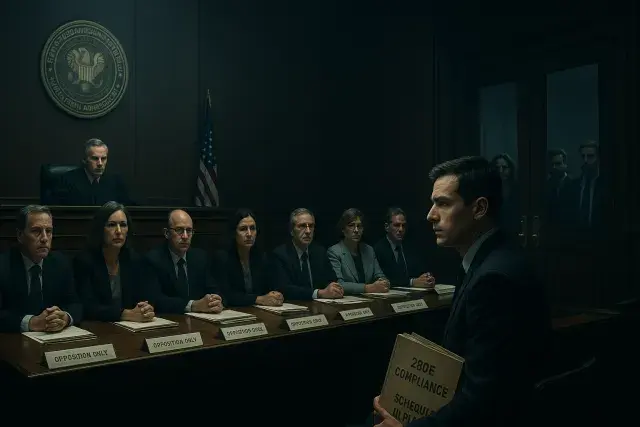
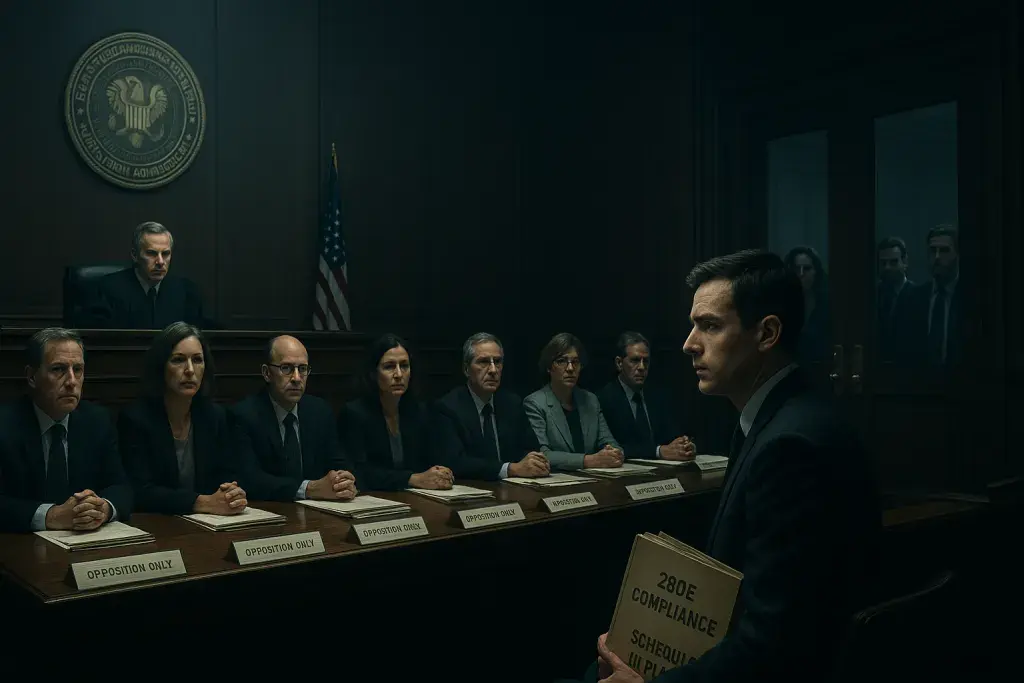
On June 29, a federal administrative law hearing opens in Arlington, Virginia that will shape - or stall - marijuana's path off Schedule I. The DEA invited seven outside participants to weigh in on whether cannabis should move to Schedule III. Every one of them opposes rescheduling. Not a single reform supporter made the list.
That fact matters far beyond the Beltway. For dispensary owners managing compliance programs under the weight of 280E tax treatment, for multi-state operators trying to plan capital allocation without knowing whether federal law will shift, for payment processors still working around banking restrictions that Schedule III reform might ease - the outcome of this proceeding carries direct operational consequences. State-licensed retailers in markets like New Jersey, where sophisticated cannabis pos new jersey infrastructure has been built around an assumption that the regulatory environment will gradually normalize, are watching this closely. A prolonged federal impasse doesn't just affect lobbying budgets. It freezes decisions about expansion, technology investment, and compliance posture across the entire licensed industry.
The DEA's roster, released June 18, includes the National Drug & Alcohol Screening Association, the Tennessee Bureau of Investigation, Smart Approaches to Marijuana, the states of Nebraska, Idaho, Indiana and Louisiana, DUID Victim Voices, and two individual physicians. Every name opposes loosening federal cannabis law. Some have sued to block the reform outright. Groups representing the overwhelming majority of public commenters - NORML, the Drug Policy Alliance, the American Trade Association for Cannabis & Hemp, and Nabis, the country's largest licensed cannabis wholesale distributor - were all rejected. The DEA's reasoning: because these organizations support rescheduling, they cannot be "adversely affected or aggrieved" by it, and therefore have no standing to participate. Supporters of a rule, the logic goes, are ineligible to defend it.
A Standard That Shifted With the Administration
The definition of "adversely affected or aggrieved" did not change between administrations. The proposed rule did not change. What changed is who applied the definition. Under the Biden administration, then-DEA Administrator Anne Milgram seated 25 designated participants - supporters and opponents both - using the same standard. The veterans group Hemp for Victory qualified under that earlier process. Under the current administration, seven participants qualified, all opponents. The Drug Policy Alliance's director of drug markets and legal regulation, Cat Packer, noted publicly that more than 70 percent of public comments on the proposed rule supported decriminalization, and that researchers at Johns Hopkins and UC San Diego found 92.4 percent of the roughly 43,000 public commenters backed the Schedule III move or wanted broader reform. None of that perspective will be heard in the room.
What's striking here is the structural bind this creates for the DEA itself. With every outside supporter excluded, the agency is, on paper, the sole proponent of rescheduling. Chief Administrative Law Judge Derek Julius confirmed in a preliminary order that the government carries the burden of proof. Yet the proposed rule itself states the DEA "has not yet made a determination as to its views of the appropriate schedule for marijuana." The agency must carry a case it won't fully endorse. That is not a posture designed to produce a durable administrative record.
The Proceeding's Design Creates Its Own Legal Exposure
Here is the catch that the DEA does not appear to have fully priced in: a one-sided record is a weak record. When a rule gets challenged in federal court - and this one already is, with three consolidated petitions filed in the D.C. Circuit - reviewing judges look at the administrative record the agency built. If that record contains only opposition testimony, with no evidence or witnesses representing the view held by the vast majority of public commenters, the government may have difficulty demonstrating it weighed the question fairly. Cannabis Business Times flagged this risk directly: by locking supporters out, the DEA may have compromised its own ability to defend a Schedule III decision in judicial review. In trying to control the room, the agency may have handed reform's legal opponents a separate and more durable argument - that the process itself was defective.
There is also the matter of Smart Approaches to Marijuana attempting to call a DEA pharmacologist, Luli Akinfiresoye, who authored an internal report linking cannabis to psychosis, depression, and cognitive impairment. The DEA is resisting putting her on the stand. So the agency excluded every pro-reform voice from the hearing, then moved to keep its own most prominently anti-cannabis internal witness off the record. Both things are simultaneously true, and neither reflects a process built for credibility.
No Verdict, No Deadline, No Clean Outcome
The hearing runs June 29 through July 15, with a recess July 3 through July 5. The government presents first; the seven opponent groups and individuals each take assigned days across July. When testimony closes, Judge Julius will issue a recommendation - but it is not binding. The DEA and the Justice Department can follow it, ignore it, or sit on it indefinitely. As attorney Jason Adelstone of Harris Sliwoski told MJBizDaily, both the judge and the DEA operate under no deadline whatsoever. The ALJ could recommend Schedule II instead of Schedule III, a classification that would subject the broader cannabis market to pharmacy-style controls and complicate the supply chain structures that licensed operators have spent years building. He could recommend leaving cannabis on Schedule I. The range of outcomes is wide, and none of them arrive on a fixed timeline.
The hearing will not be livestreamed. Judge Julius ruled it will not be televised, broadcast, or recorded in any form, and banned recording devices from both the courtroom and the lobby. Physical attendance at the DEA facility at 700 Army Navy Drive in Arlington is the only option for anyone who wants to observe. The Biden-era version of this proceeding was livestreamed. This one is not. Marijuana Moment's counsel submitted a letter asking the judge to reconsider, arguing that a hearing dependent on limited physical access is not meaningfully public. The judge has not changed course.
For licensed operators, the practical message is this: do not build your next 12 months around a resolved federal outcome. The process has no binding endpoint, the administrative record is already legally vulnerable, and courts are likely to have the final word - on a timeline nobody can predict. Plan compliance, investment, and banking relationships for continued ambiguity. The hearing matters. A clean resolution from it does not look likely.