Mankato, Minnesota, now has all of its available consumer cannabis dispensary permits spoken for - barely half a year after the first recreational storefront opened its doors. The southern Minnesota city caps consumer dispensaries at four under local ordinance, and the scramble to claim those slots has drawn interest from operators across the state, including a tribal-owned enterprise with a substantial existing footprint.
A Market Taking Shape, Quickly
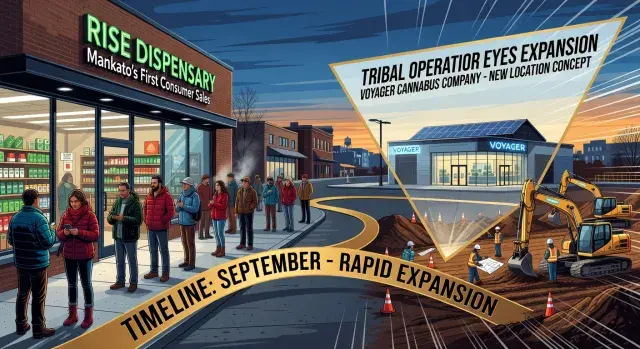
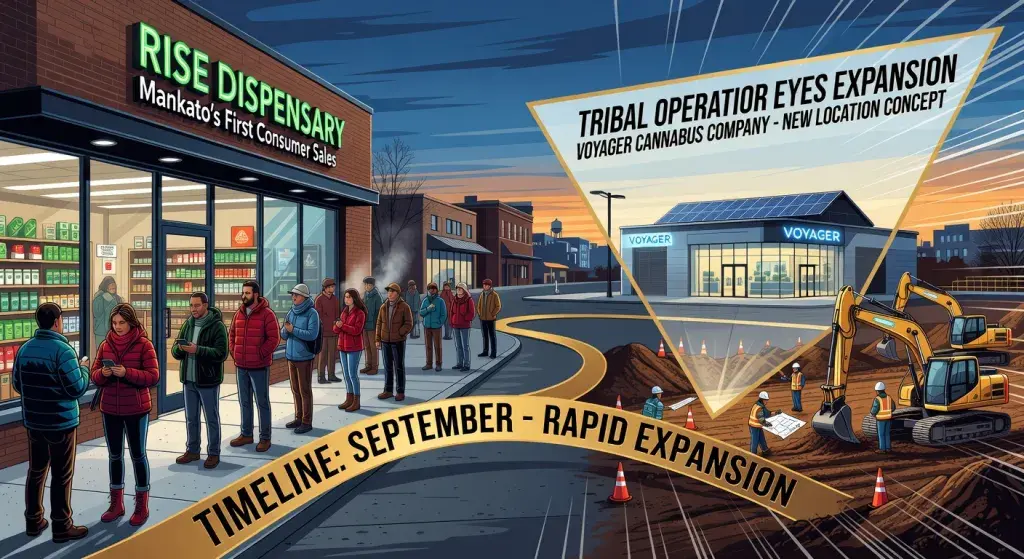
The timeline here is compressed. Rise Dispensary, which had already been operating as a medical cannabis outlet in Mankato, became the first to sell consumer products last September. Two months later, Voyager Cannabis Company launched as the city's first locally owned dispensary. And now Island Pezi - a tribal-owned operation backed by the Prairie Island Indian Community, which also owns Treasure Island Casino - has announced plans to open at 1809 Adams Street in the River Place Center within the next few months.
Here's the wrinkle: Rise's medical dispensary classification means it doesn't count against Mankato's four-slot consumer cap. That leaves three consumer permits, all of which the city told local news outlet KEYC have been claimed. Whether Island Pezi holds one of those three remains an open question. Tribal dispensaries can be counted against the municipal limit at the city's discretion, and Mankato officials have not clarified Island Pezi's status.
That ambiguity matters. It determines whether Mankato's dispensary ceiling has truly been reached or whether there's still room for another entrant.
Why Mankato Draws Attention
Mankato sits as a regional center in southern Minnesota - the kind of mid-sized city that serves a wide surrounding geography for commerce, healthcare, and now, apparently, cannabis retail. Scott Johnson, general manager of Tokahe Distribution, which works with dispensaries statewide, described it bluntly as "a regional hub." The population density and draw from outlying communities make it attractive for operators who want volume without the overhead - or competition - of the Twin Cities metro.
The Prairie Island Indian Community's interest is telling. Island Pezi is involved with more than 50 dispensaries around Minnesota, according to Ed Buck of the Prairie Island Cannabis Commission. That's a large operational footprint, and when an entity of that scale identifies a particular market as a priority, it signals something about the economics. The group has been in discussions with Mankato's city government for the better part of a year - not a casual inquiry.
Tribal Sovereignty and Municipal Authority
The intersection of tribal cannabis operations and municipal regulation is one of the more interesting fault lines in Minnesota's emerging recreational market. Under state law, cities retain some discretion over how - and whether - tribal dispensaries count toward local caps. That creates a gray zone. Tribal sovereignty gives Indigenous communities certain rights to operate cannabis businesses, but city zoning and licensing frameworks impose their own constraints.
In practice, this means the relationship is negotiated rather than dictated. Buck's emphasis on "communicating with the city and the areas we plan on going into" suggests a deliberate strategy of cooperation rather than confrontation. Smart, given that antagonizing local governments rarely makes for smooth permitting - regardless of the legal authority one may hold.
Island Pezi's planned location, just a block from Rise Dispensary, also raises proximity questions. Clustering can be either a benefit - creating a destination effect - or a drawback, depending on how the local market matures.
What Comes Next
With all dispensary slots claimed, Mankato's cannabis retail map is effectively set for the foreseeable future. The question shifts from who gets in to how these operators perform - and whether four (or five, depending on how you count Rise) dispensaries can sustain themselves in a city of roughly 45,000. Early entrants in newly legalized markets often benefit from novelty demand, but long-term viability depends on foot traffic, product mix, pricing, and the speed at which surrounding communities develop their own retail options.
For now, Mankato is a case study in miniature: a mid-sized American city absorbing a new industry in real time, balancing municipal control with market demand, and sorting out the jurisdictional puzzle that tribal operations inevitably introduce. The permits are taken. The storefronts are coming. What happens inside them - and what it means for the community - is the longer story still being written.