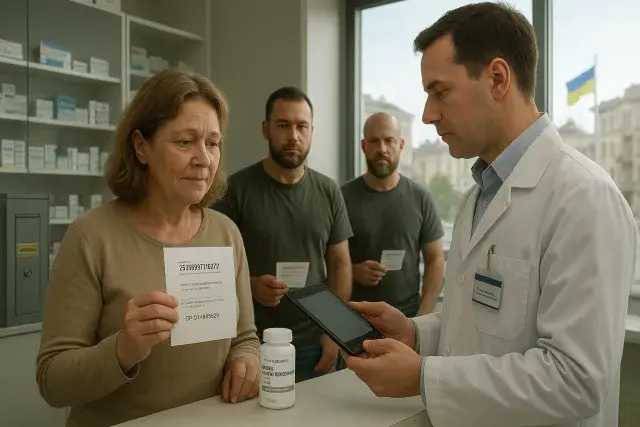
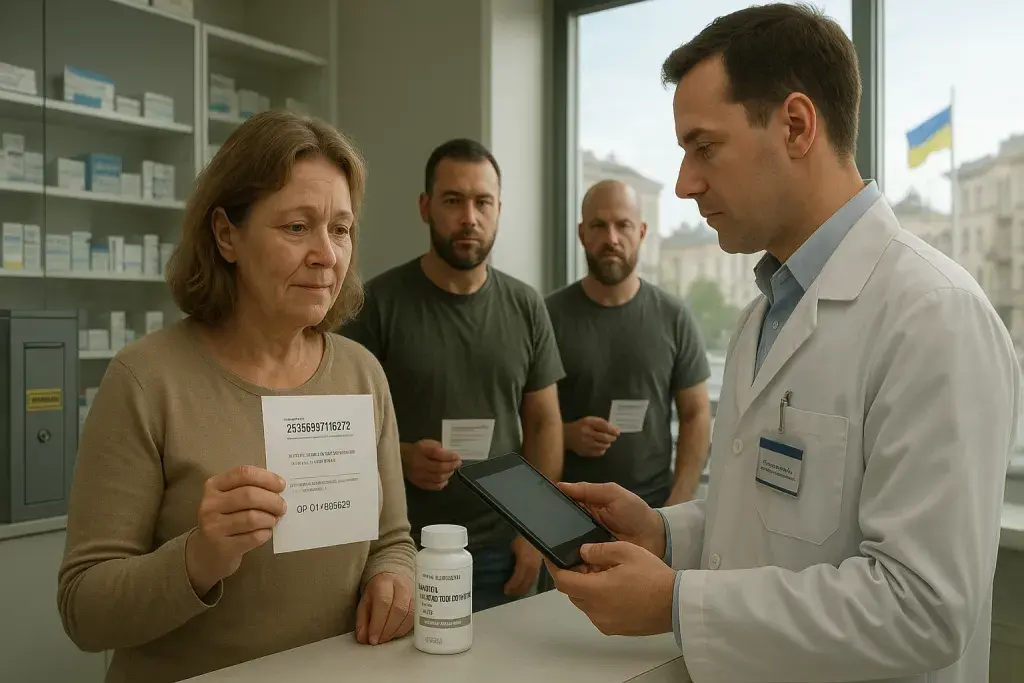
On June 11, three patients in Vinnytsia, Ukraine, became the first people in the country's history to purchase medical cannabis-based medicines under a functioning electronic prescription system. The patients - a woman diagnosed with multiple sclerosis and two veterans managing chronic neuropathic pain and phantom limb pain following amputation - each received an e-prescription for a delta-9-tetrahydrocannabinol product in hard capsule form, starting at a 5 mg dose. It is a narrow but genuinely significant first: not a pilot, not a policy announcement, but an actual dispensing transaction under a live regulatory regime.
The milestone follows the August 2024 entry into force of Law No. 3528-IX, which authorized state-regulated cannabis for medical use and set the legal foundation for everything from manufacturing to retail dispensing. Getting from that law to an actual patient walking out of a pharmacy with medicine in hand required a full stack of subordinate regulations - procedures for production, import, compounding, inventory accounting, dispensing, and oversight. That gap between legislation passing and an operational access mechanism working is where most countries stumble; Ukraine spent roughly ten months closing it. For context, operators managing a cannabis dispensary pos alaska understand the weight of that back-end compliance infrastructure well - point-of-sale systems, prescription verification workflows, and dispensing controls don't materialize the moment a law is signed. They require software integration, staff training, and regulatory sign-off at every node of the chain.
The licensing structure Ukraine has built is instructive. Entities that want to manufacture or dispense medical cannabis-based medicines must hold licenses covering production, wholesale and retail trade, and import of medicinal products, plus a separate license specifically authorizing activities involving narcotic drugs, psychotropic substances, and precursors. On top of that, any pharmacy that intends to compound these medicines - rather than simply dispense a finished manufactured product - must also obtain a quota. That is a multi-layered compliance burden by design, mirroring how tightly controlled pharmaceutical markets in the European Union and elsewhere handle Schedule I-adjacent substances. According to Ukraine's State Service on Medicines and Drugs Control, approximately 36 public entities and 30 private ones currently hold the relevant licenses across 180 practice locations. Right now, patient access is concentrated in six pharmacies operated by a single licensed entity, with locations in Vinnytsia, Dnipro, Lviv, Ivano-Frankivsk, Ternopil, and Khmelnytskyi. Around 17 additional pharmacies are expected to join the dispensing network in the near term.
What Gets Prescribed - and Who Qualifies
Medical cannabis-based medicines in Ukraine are not available on demand. They follow a Ministry of Health-approved list of qualifying conditions: chronic or neuropathic pain and spasticity linked to malignant neoplasms, diabetic neuropathy, and multiple sclerosis; nausea and vomiting from chemotherapy; Parkinson's disease; and other conditions where standard pharmacotherapy has failed or produced unacceptable adverse reactions. That last qualifier matters - this is explicitly a last-resort or adjunct pathway, not a general wellness channel. Dosage and treatment regimen are set individually by the prescribing physician, accounting for age, weight, comorbidities, and clinical history.
The prescription infrastructure is electronic end-to-end. A primary care physician or specialist issues the e-prescription, which carries a 10-day validity window from the date of issuance. The patient receives a notification containing the e-prescription number and a redemption code - functionally similar to the two-factor dispensing controls that mature cannabis markets in North America have built into their point-of-sale and seed-to-sale tracking workflows. At the pharmacy counter, the patient presents both the prescription number and the confirmation code. If the medicine requires compounding rather than off-the-shelf dispensing, the pharmacist schedules a follow-up visit, and the patient must present both credentials again at pickup. The National Health Service hotline - 16-77 - provides pharmacy location information for patients who need it.
The Operational and Policy Implications
Here's what this moment actually represents from a regulated-market standpoint: Ukraine has compressed a process that many jurisdictions stretch over years - legislative authorization, subordinate rulemaking, licensing buildout, system integration, and first dispensing - into roughly ten months of active implementation. That is a meaningful data point for policymakers elsewhere watching how a country with no prior medical cannabis infrastructure stands up a compliant access framework under wartime conditions.
The dual-license requirement (pharmaceutical plus narcotic substances) creates a high barrier to entry, which is intentional but also constraining. Six dispensing locations for a country of Ukraine's scale means access is currently limited to a handful of urban centers. The expected expansion to approximately 23 pharmacies total would ease that, but the licensing and quota architecture will determine how quickly the network can realistically grow. Compounding pharmacies in particular face quota ceilings, which function like production caps - a familiar friction point in any supply-controlled medical cannabis regime.
What's striking here is the patient profile that opened this program: a person with multiple sclerosis and two combat veterans with amputation-related pain. Those are not incidental choices. They reflect a policy decision to establish the program's legitimacy first with conditions that carry broad social recognition - chronic, treatment-resistant, and in the case of the veterans, directly tied to wartime sacrifice. That sequencing is deliberate, and it shapes how the program will likely be perceived as it scales. The compliance architecture is now live. The harder work - expanding the dispensing network, training prescribers, managing quotas, and maintaining airtight chain-of-custody from manufacturer to patient - starts now.