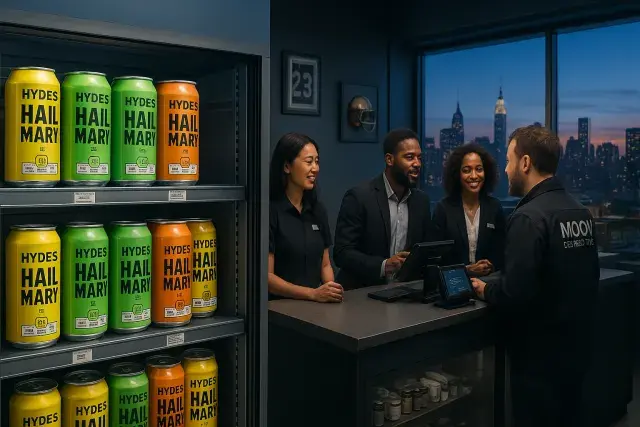
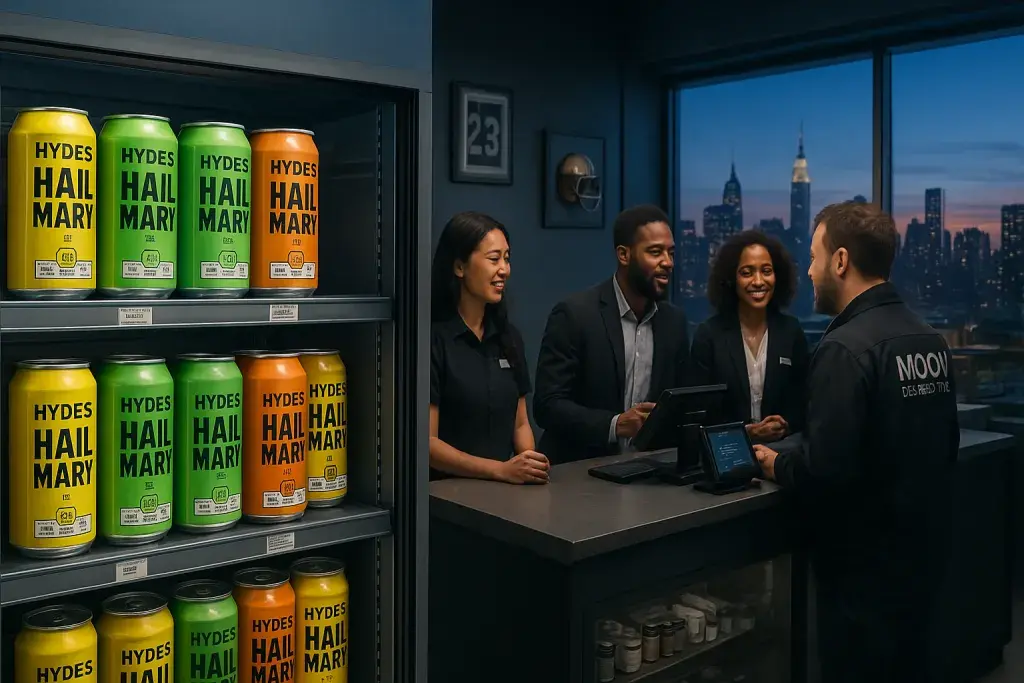
A cannabis and hemp beverage company founded by a former professional football safety is moving into New York's licensed dispensary channel, adding another branded product line to a beverage category that operators say is growing faster than most other segments on their shelves. Hyde's Hail Mary, started by Micah Hyde, announced a statewide distribution partnership with MOOV Distribution that will place its four cannabis-infused sparkling shandy flavors - Lemon, Apple, Orange, and Ginger - into licensed dispensaries across the state.
For dispensary buyers, the arrival of a new beverage SKU isn't just a shelf-space decision; it touches inventory management, point-of-sale configuration, and compliant packaging review before a single unit moves through the door. Retailers bringing on new beverage lines still have to run each batch through the same lab testing and COA verification process as any other product category, and back-office systems - whether that's a standard seed-to-sale platform or something like a Nevada dispensary POS platform used in other regulated markets - need SKU-level data updated to keep tax reporting and batch tracking clean. That operational overhead doesn't disappear just because a brand carries name recognition. Nevada dispensary POS platform
Why Beverages Are a Distinct Retail Category
Cannabis beverages occupy an odd spot in most dispensary planograms. They require refrigeration or at least temperature-conscious shelving in some stores, they carry different dosing expectations than edibles or flower, and they often draw a different type of shopper - one who may be newer to regulated cannabis products altogether. Onboarding a new beverage SKU means budroom staff need updated product knowledge, point-of-sale terminals need correct tax categorization, and store managers need to track sell-through separately, since beverage margins and turnover rates don't always match flower or concentrate categories.
What a Multi-State Distribution Deal Signals
Partnering with a distributor like MOOV Distribution for statewide placement is a fairly standard route for brands entering a new adult-use market - it lets the brand avoid negotiating dispensary-by-dispensary while giving retailers a single wholesale contact for reorders and delivery manifests. That structure matters for compliance too: distributors operating in regulated markets are themselves licensed and subject to their own reporting obligations, which in theory reduces the compliance burden on individual store operators bringing in new products. In practice, though, retailers still bear responsibility for verifying that incoming batches carry current lab testing documentation and meet state packaging and labeling rules before they ever reach a shelf.
Consumer Access and Responsible Retailing
Any cannabis-infused beverage sold through licensed channels is subject to the same age-verification and purchase-limit rules that apply to other regulated products - New York dispensaries are required to confirm legal purchase age at the point of sale, and products must carry compliant labeling disclosing THC content per serving. Beverages in particular carry a documented risk of delayed onset effects compared to smoked or vaporized products, which is part of why regulators require clear dosing information on packaging. None of that changes because a brand has built recognition outside the cannabis industry; the compliance obligations are the same for every operator carrying the product.