Rhode Island's retail cannabis licensing process is back in motion, but operators who thought they'd cleared the hardest part are starting over. The entire application pool, along with every social equity certification tied to it, was scrapped in April after a federal court found that the state's residency requirement - mandating at least one applicant live in Rhode Island - was unconstitutional. It's not the first time a court has struck down that kind of provision; similar residency rules have failed in other jurisdictions before reaching Rhode Island's docket, which made the Cannabis Control Commission's decision to press ahead anyway look, in hindsight, like a bet nobody needed to make.
For dispensary operators still standing in line, the practical stakes are considerable. Every applicant now has to reassemble real estate holdings, zoning approvals, and supporting documentation under a compressed timeline, while also managing the operational side of running or preparing to run a compliant storefront - everything from seed-to-sale tracking through METRC to staffing a compliant point-of-sale setup. Vendors serving this market, including companies offering a cannabis retail POS system, are likely to see renewed interest as applicants firm up buildouts and prepare for compliance audits tied to licensing. That's the quiet backend of a headline-driven story: software, security, and inventory systems all have to be ready before a single sale happens. cannabis retail POS system
New Deadlines, Same Old Pressure
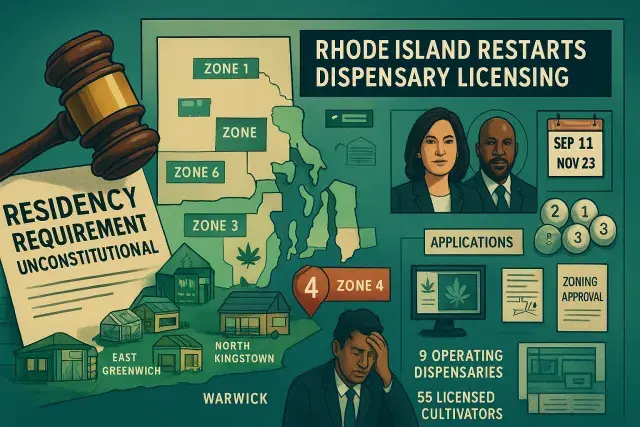
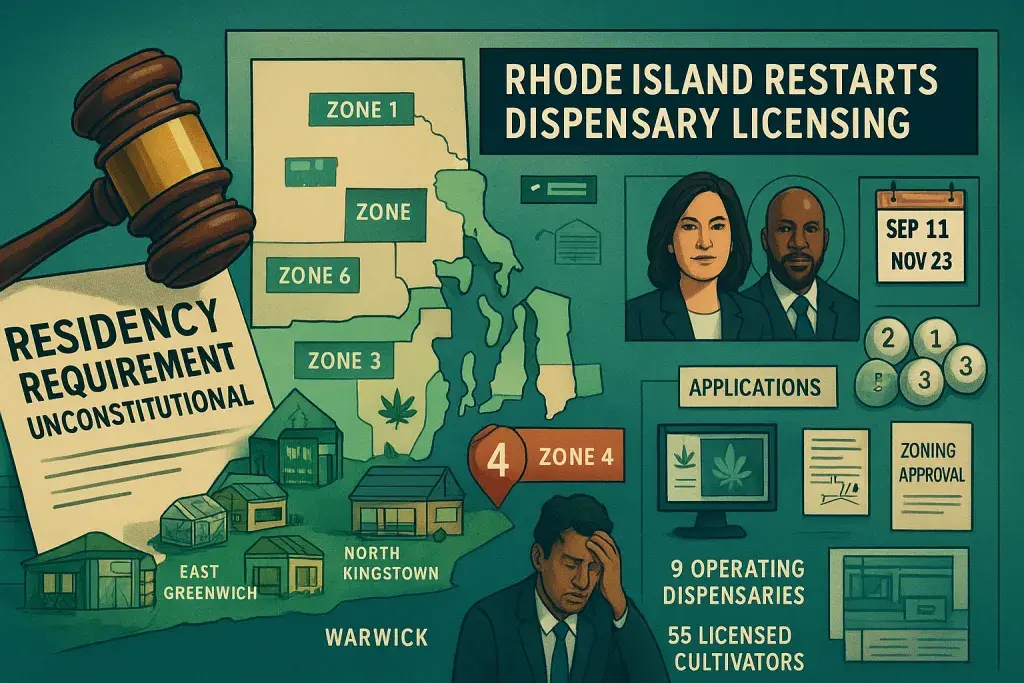
Social equity certifications are due by September 11, and the retail license application window closes November 23. The General Assembly, in fixing the residency problem, also stripped out several implicit residency-adjacent requirements from the social equity track - a change that broadens who can qualify but doesn't necessarily make the process faster or less expensive for applicants who've already sunk money into leases they can't yet use. The Commission was given 60 days from the bill's passage to reopen certifications and stand up a new application process, which is the tight window regulators are now working against.
A Lottery System With an Uneven Playing Field
Once applications close, the state will award licenses through a lottery, restricted to applicants who meet baseline requirements - real estate control and proper zoning chief among them. The state has authorized 24 licenses spread across six zones, split between social equity, worker cooperative, and general retail categories. The canceled lottery would have distributed only 20, since Zone 1 in the north and Zone 4, covering East Greenwich, North Kingstown, Cranston, and Warwick, didn't draw enough applicants the first time around.
Here's the catch that's drawing the most frustration: restarting the process lets fresh applicants jump in without having carried the sunk cost of real estate for years, while earlier applicants who've been paying lease payments on properties held solely to qualify are now competing against latecomers with no such burden. Judge Melissa DuBose didn't mince words on how this outcome came about, calling the fallout "self-inflicted" by a Commission that pushed forward despite repeated warnings from other courts. The Commission was chaired through October 2025 by Kim Ahern, now a candidate for attorney general, alongside members Layi Oduyingbo and Robert Jacquard.
Supply Side Feels the Squeeze
While the relicensing fight played out, cultivators kept absorbing the cost of a market with too few retail outlets. Rhode Island currently has nine operating dispensaries and 55 licensed cultivators, down from 58 earlier this year - a contraction driven by OP Pharm, LLC folding into a vertically integrated compassion center called New Leaf Compassion Center, and Blackstone Valley Group opting not to renew its license. Six of the nine dispensaries are partially or fully vertically integrated, meaning they grow a share of what they sell, which shrinks the wholesale market available to independent cultivators even further.
Before the April derailment, the Commission had floated slowing licensing further, worried that adding dispensaries too quickly could trigger price compression among the nine existing stores. That's a legitimate regulatory concern in a small state with a fixed license structure, but it sits awkwardly next to cultivators who say they're barely holding on while waiting for more retail doors to sell into. Balancing shelf space against grower solvency is exactly the kind of tension regulators in capped-license states are built to manage - Rhode Island's version of that fight is simply playing out in public, on a deadline, after a court forced the reset.