
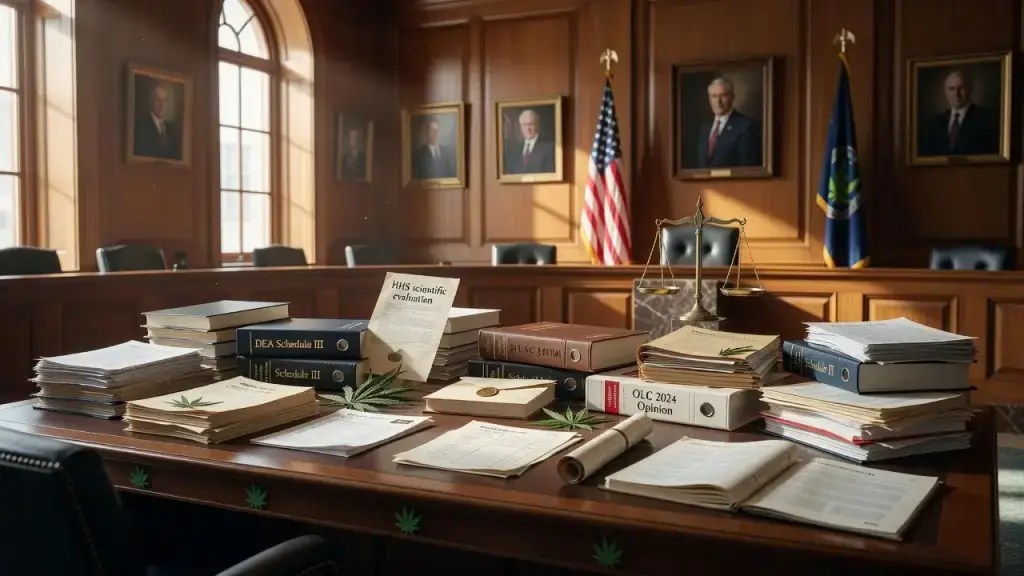
The DEA's cannabis rescheduling proceeding has stalled, not stopped. A Government Accountability Office report questioning agency recordkeeping practices triggered a procedural pause just as the industry hoped for a recommendation ahead of the midterms. That delay is real. The death of the proceeding is not.
What The GAO Actually Found
Strip away the alarm, and the GAO report says something fairly unremarkable: DEA and FDA lack comprehensive written policies for how staff evaluate and schedule controlled substances. FDA has no written criteria for judging "potential for abuse." The memorandum of understanding between FDA and the National Institute on Drug Abuse hasn't been updated since 1984. Both agencies agreed to fix the gaps. Fair enough - that's reasonable government-accountability work.
Here's the catch opponents keep skipping over: GAO reviewed 95 substances requiring HHS input between 2020 and 2025, and in every single case, DEA requested and considered HHS's scientific evaluation. Of the 84 with final decisions, DEA's call matched HHS's recommendation 100 percent of the time. That's not a pattern of dysfunction. That's a process working exactly as designed, just without a thick enough instruction manual sitting behind it.
Procedure Versus Substance
The chief administrative law judge's order in response to the report does one thing: it pauses the proceeding so the government and rescheduling opponents can brief a motion to add the GAO report to the hearing record. That's it. It doesn't touch the HHS scientific evaluation supporting schedule III. It doesn't reopen the medical marijuana rescheduling, which already happened and rested on separate statutory authority under 21 U.S.C. § 811(d) and U.S. treaty obligations - not on this proceeding at all.
Opponents argue that because DEA's schedule III case leans on HHS's 2023 evaluation, and because FDA reached a different conclusion on abuse potential back in 2015, the absence of a written standard means nobody can tell whether the science changed or just the yardstick did. That's a clever framing. It's also beside the point: no statute requires the written policies GAO recommended. The CSA and its implementing regulations already set the legal bar, and DEA said as much directly to GAO.
What The Record Actually Contains
This isn't a thin file propped up by a single memo. The rescheduling record includes a 252-page HHS scientific evaluation, thousands of pages of supporting health and safety data, the attorney general's final order, and a complete hearing record with briefing from all sides. The Justice Department's Office of Legal Counsel separately concluded in 2024 that HHS's two-part test for "currently accepted medical use" is valid, and that DEA's old five-part test had been too narrow - a substance doesn't need FDA approval to clear that bar. OLC also found that schedule III placement, with appropriate controls, can satisfy U.S. treaty commitments.
None of that evaporates because GAO flagged a stale interagency memo.
Operational Stakes For The Industry
For multi-state operators and dispensary owners planning around 280E tax relief, schedule III matters enormously - it would end the federal tax penalty that currently disallows ordinary business deductions for plant-touching companies. That's the real financial pressure point, far more than any abstract debate over scheduling procedure. A delay into 2027, which now looks like a realistic timeline for a final rule, means operators keep absorbing that tax burden longer than expected.
- Briefs on the GAO motion are due shortly, with possible supplemental briefing to follow
- A recommended decision from the chief ALJ comes next, followed by a mandatory 25-day window before certification
- Final rulemaking realistically lands no earlier than early 2027
In practice, though, the smarter long-term bet for operators and trade groups may not be the administrative process at all. As GAO itself notes, Congress retains the power to reschedule cannabis by statute, sidestepping the kind of procedural challenge now working its way through DEA's hearing docket. That path is slower to build political consensus but far less exposed to the sort of motion practice currently eating up the calendar.