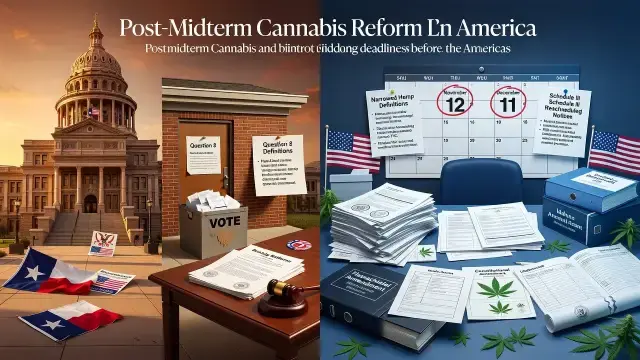
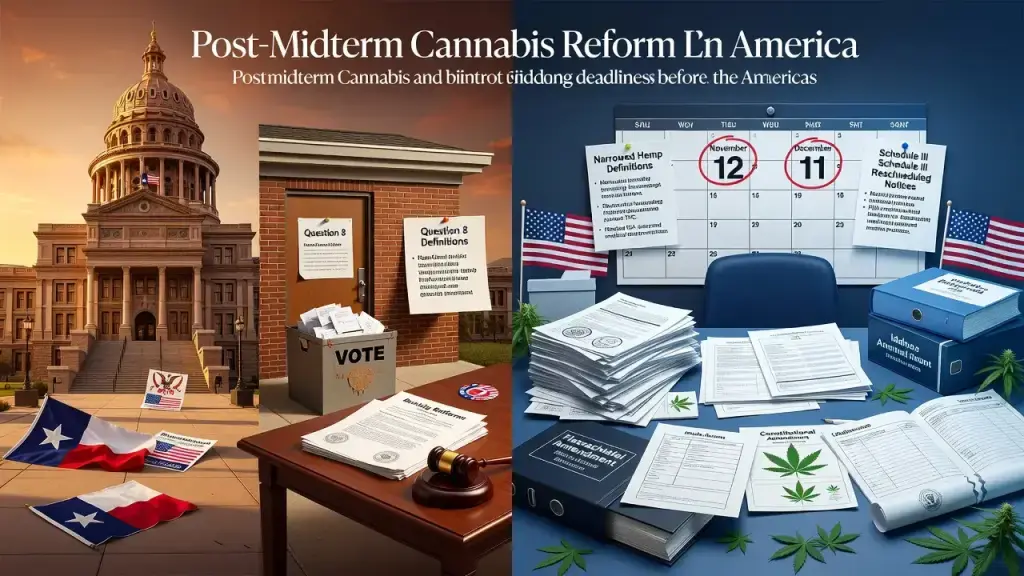
The midterms reshuffled the political map for cannabis, but they did not rewrite the rules businesses operate under this week. Texas elected leadership more sympathetic to hemp commerce, Massachusetts voters protected an established adult-use market, and Democrats retook Congress with cannabis banking reform back on the table. None of that changes the compliance obligations sitting on a dispensary manager's desk or the federal hemp deadlines arriving before January.
A Political Shift, Not a Regulatory One
Texas offers the clearest illustration of the gap between an election result and an operating environment. Lt. Gov. Dan Patrick, the chief architect behind last year's sweeping THC prohibition effort, lost his seat. Democrats also took the governor's office and the state House. That's a meaningful realignment heading into the next legislative session. Here's the catch, though: the restrictions already in place - limits on smokable hemp products, steeper licensing fees, Delta-8's controlled status under a state Supreme Court-affirmed scheduling action - remain fully in force. A new governor and a different House majority can propose change. They cannot undo an existing rule by winning an election. For retailers managing wholesale menus and compliant packaging under current law, the operational reality on a Wednesday morning after the vote looked identical to the Tuesday before it.
Massachusetts Defends What It Already Built
Massachusetts voters delivered a different kind of result: not a path toward future reform, but a rejection of rollback. Question 8 would have ended licensed adult-use sales and home cultivation outright, and voters turned it down decisively. For operators, that outcome carries financial weight beyond the symbolic. A repeal threat sitting on the ballot complicates every loan renewal, insurance review, and credit decision a lender makes about a cannabis business, because it introduces doubt about whether the market itself survives. With that threat removed, Massachusetts operators now carry a cleaner story into financial institution reviews - a market voters have affirmed more than once tends to read differently on an underwriting file than one facing active repeal efforts. Idaho's rejection of a constitutional amendment restricting future legalization initiatives points in a similar direction: no new market opened, but a future path stayed open.
Banking Reform's Familiar Obstacle
Democratic control of Congress reopens a door that has closed on cannabis banking reform before. Bipartisan support for measures easing banks' and credit unions' exposure to cannabis-related deposits has existed for years without producing enacted law. The Senate Banking Committee advanced a banking bill with bipartisan votes in 2023; it went nowhere beyond that committee stage. A new majority creates opportunity, not a guarantee. Operators should treat banking reform as a possibility worth tracking, not a certainty to plan around - capital access, loan terms, and cash-handling costs remain unchanged until legislation actually clears both chambers and reaches a president's desk.
The Hemp Deadline Nobody Can Ignore
The most consequential date on the calendar has nothing to do with who won in November. Last year's federal spending law narrowed the hemp definition, and a provision excluding products with more than a small threshold of combined THC and related cannabinoids per container would sweep ordinary intoxicating hemp beverages and edibles out of the legal hemp category altogether. Most of those changes were delayed until December 11. A narrower exclusion - covering cannabinoids that cannot occur naturally in the plant - kept its original November 12 effective date. Retailers need to track both dates separately, because conflating them risks a compliance gap. Rescheduling marijuana to Schedule III, meanwhile, applies only to FDA-approved products and state-licensed medical marijuana activity; it does not touch recreational markets or hemp-derived products, and state licensure alone does not confer federal registration. Each of these threads - state law, federal hemp definition, banking policy, and rescheduling - moves on its own timeline, and operators conflating them do so at their own risk.