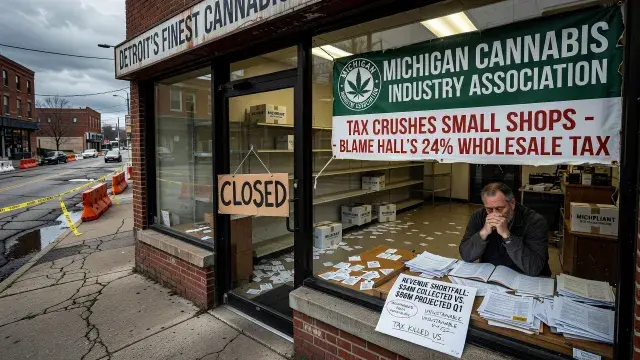
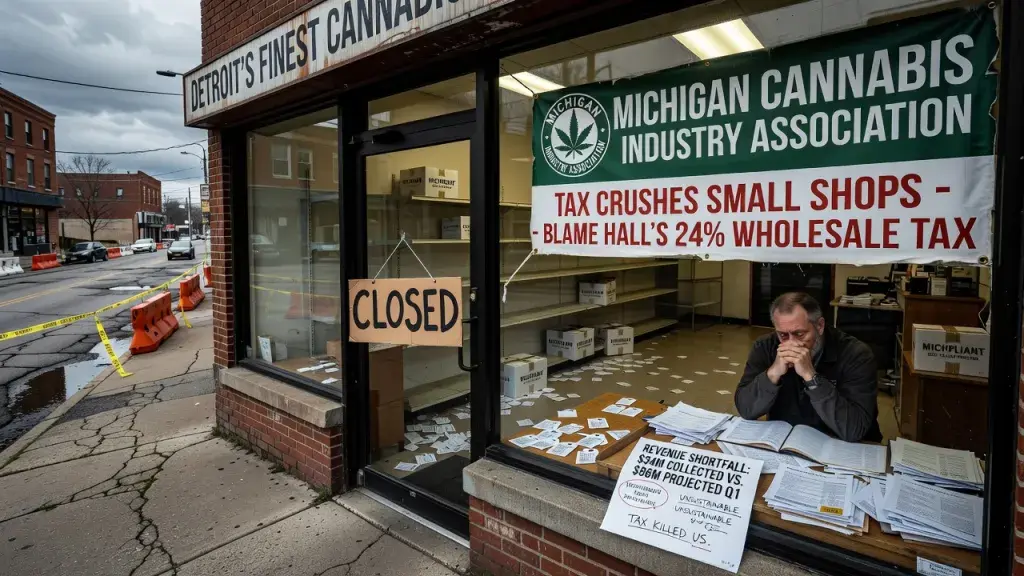
A 24% wholesale tax on marijuana, built into the road funding package championed by House Speaker Matt Hall and passed in 2025, went into effect this year with a simple pitch: raise money for local road repair without touching the general fund. The revenue has come in far below projections, and the Michigan Cannabis Industry Association says the damage to small operators is already showing up in closures, layoffs, and worse.
A Funding Mechanism That Undershot Its Own Math
The tax was projected to generate $86 million in its first quarter. State treasury figures show it brought in $34 million, less than half the target. That gap matters beyond the spreadsheet. Road funding plans built on cannabis excise revenue tend to assume stable or growing wholesale volume. When a new tax compresses margins hard enough to push legal operators out of the market, the tax base itself shrinks - which is exactly what appears to be happening here.
Wholesale taxes hit differently than retail excise taxes. A 280E-burdened cultivator or processor already can't deduct ordinary business expenses on federal returns. Layer a 24% wholesale levy on top, and the math on compliant packaging, lab testing, seed-to-sale tracking fees, and payroll stops working for operators running thin margins. Some simply can't absorb it. Others pass it downstream, and dispensary point-of-sale terminals end up reflecting a price jump that consumers notice immediately - which can push demand toward the illicit market, undermining the very tax base the policy was designed to protect.
What 30 Closures Signal to the Rest of the Industry
Thirty businesses shuttering in a single year is not noise; it's a trend line. For multi-state operators with diversified revenue and deeper capital reserves, a wholesale tax increase is a line-item problem. For single-location dispensaries and small cultivators operating on compressed wholesale pricing and thin inventory turns, it can be existential. The Michigan Cannabis Industry Association has also reported two business owner suicides this year - a grim reminder that policy decisions on tax structure carry human stakes far beyond quarterly treasury reports.
If you or someone you know is struggling or in crisis, help is available. Call or text 988 or visit the Lifeline Chat to connect with a trained crisis counselor.
The Political Fallout Operators Should Watch
A majority of Michigan House Republicans voted for the tax hike as part of the road funding deal. That detail matters for operators trying to read the regulatory environment ahead. Industry groups watching this issue have also raised concerns about the Michigan Republican Party's endorsement of John James for governor, a lawmaker critics describe as having delivered little on prior legislative commitments. Whether that translates into further tax adjustments, relief measures, or continued pressure on wholesale pricing will shape how operators plan inventory, staffing, and expansion through the next fiscal cycle.
- Projected first-quarter revenue: $86 million
- Actual revenue collected: $34 million
- Business closures reported this year: 30
- Tax rate: 24% wholesale
What Operators Need to Track Going Forward
For dispensary owners, wholesalers, and compliance teams, the near-term priority is modeling how wholesale tax exposure flows through to retail pricing without triggering a consumer shift toward unregulated sources. That means revisiting wholesale menus, renegotiating supplier contracts where possible, and keeping close watch on treasury revenue reports as an early signal of whether lawmakers might revisit the rate. In practice, though, the bigger question is whether a road funding plan dependent on cannabis tax revenue is sustainable if it keeps shrinking the very industry it taxes.