A short-term federal funding bill, not a change of heart in Jefferson City, is what's keeping hemp-derived THC beverages on Missouri store shelves past Nov. 12. The U.S. Senate approved a measure early Saturday, Aug. 8, that would fund federal agencies through Dec. 11 and, tucked inside it, delay the federal ban on intoxicating hemp products until that same date. The bill still needs House approval and a presidential signature, but for Missouri's hemp beverage sellers, it's the difference between a hard shutdown and a few more weeks of runway.
The mechanics here matter more than they might seem to at first glance. Missouri Gov. Mike Kehoe signed legislation this spring pulling intoxicating hemp products from shelves starting Nov. 12, largely mirroring the federal ban Congress passed last year. But state lawmakers wrote in a narrow carve-out: if Congress delays the federal ban, everything except intoxicating beverages still goes away on schedule in Missouri. That's an odd bit of statutory drafting, and it means edibles, tinctures, and vape products are gone in November regardless of what happens in Washington, while canned seltzers and similar drinks get a reprieve tied directly to the federal calendar. For operators trying to plan wholesale menus, inventory, and staffing around that split, the compliance logic is anything but simple, and it's exactly the kind of regulatory patchwork that pushes retailers toward providers offering compliant cannabis POS in South Dakota and other states already grappling with hemp-versus-marijuana definitional fights. compliant cannabis POS in South Dakota
A Lawsuit Running in Parallel
The Missouri Hemp Trade Association and a coalition of hemp businesses aren't waiting on Congress alone. They filed a federal lawsuit last month in the U.S. District Court for the Western District of Missouri, arguing the state's new law contains unconstitutionally vague definitions separating hemp from marijuana. That distinction - largely a matter of THC concentration and testing methodology under the 2018 Farm Bill framework - has been a persistent headache for regulators and retailers nationwide. Vague statutory language creates real operational risk: a batch that passes a lab's COA one way can trigger a ban the next, depending on how "intoxicating" gets defined and enforced. Jay Patel, president of the Missouri Hemp Trade Association, called the Senate's bipartisan 61-31 vote a "good sign," but he was careful not to overstate it. Whatever Congress does, he said, "it's not going to fully solve our problems in Missouri."
What It Means for Retailers on the Ground
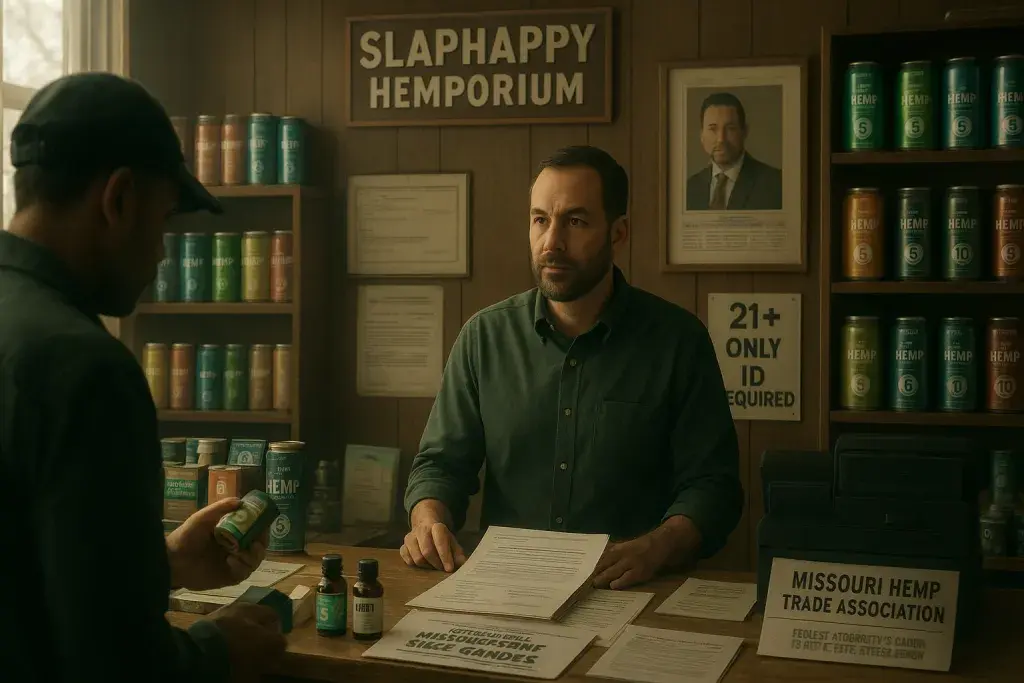
For small operators like John Grady, who owns Slaphappy Hemporium with his wife Kara in Rosebud, Missouri, the practical stakes are immediate. Grady said the Senate action suggests a strong likelihood his company's THC seltzers can keep selling through December - good news for a business that started as a beverage producer. But it doesn't fix the rest of the shelf. Customers are already stocking up on edibles and other products that face a Missouri ban no matter what happens federally, a scramble that looks a lot like pre-restriction buying patterns seen in other regulated categories when a deadline is fixed and non-negotiable.
The Bigger Regulatory Picture
This is where the story becomes less about one state and more about a supply chain built on regulatory uncertainty. Hemp beverage brands, distributors, and retailers have spent the past several years operating in a gap between alcohol-style retail expectations and cannabis-style compliance obligations - age verification, labeling, lab testing - without a uniform federal framework to anchor any of it. A Dec. 11 deadline gives industry groups a narrow window to push for something more durable than another stopgap. Whether Congress uses that time for meaningful regulation, or simply kicks the can again, will shape how multi-state brands price products, structure wholesale relationships, and decide whether Missouri remains worth the compliance overhead at all.