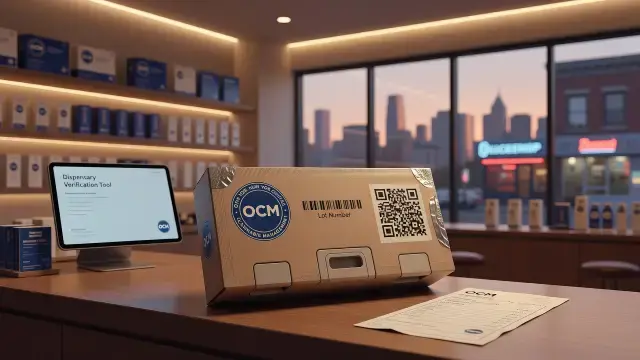
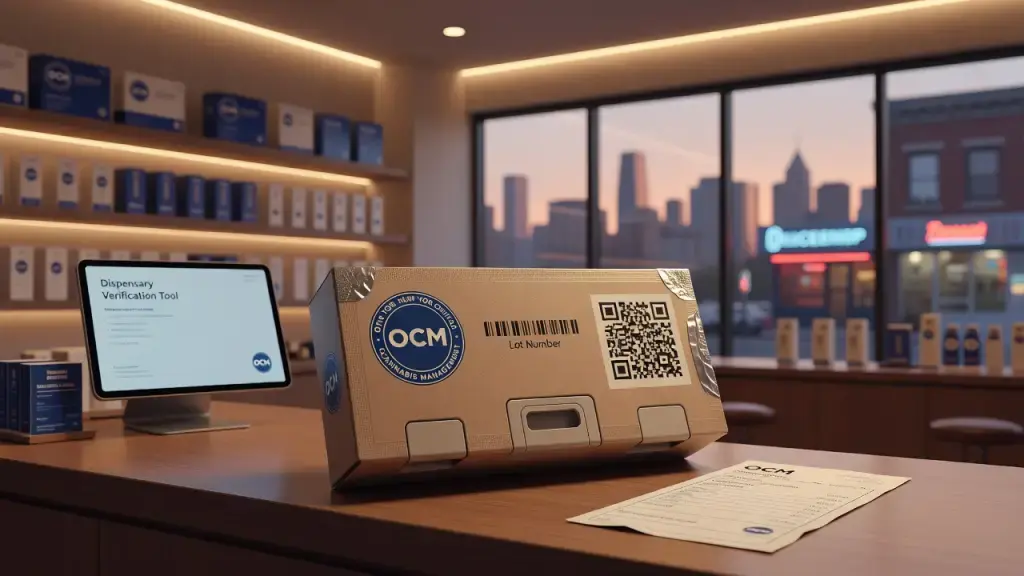
A counterfeit vape cartridge rarely looks like contraband. It looks like the real thing - same box, same font, same brand colors, maybe a lower price that feels like good luck. New York's regulated market gives buyers a faster and more reliable method than instinct: four pieces of printed evidence that a legal product must carry, each readable in about ten seconds.
Why the Packaging Itself Is the Battleground
Vape cartridges are small, valuable, and visually simple - which makes them the easiest cannabis product category to copy. A counterfeiter does not need to build a brand. Copying one is cheaper and faster: lift the artwork, fill unknown hardware with oil nobody tested, then move it through channels that don't ask questions - unlicensed storefronts, unlicensed delivery, social media sellers. None of that oil ever passed through a state-permitted lab. No certificate of analysis exists for it, because no regulator ever saw the batch.
That's the operational reality behind New York's packaging rules. The Office of Cannabis Management requires specific, verifiable marks on regulated products precisely because artwork is trivial to fake but compliance data is not. For dispensary operators, this also matters as a brand-protection issue: a counterfeit riding on a legitimate label's design damages consumer trust in the entire licensed category, not just the copied brand.
Four Checks That Take Ten Seconds Each
The checks work in sequence, and each one closes a different gap a counterfeiter might exploit.
- The universal symbol: New York requires the state's official tested-and-regulated mark on outer packaging. Artwork copied from another state's market, or printed without licensing, often gets this wrong, shrinks it, or skips it entirely.
- The lot number: Every legal batch carries a traceable identifier tied to seed-to-sale tracking. Counterfeit packaging frequently shows lot numbers that are blurred, missing, or repeated across boxes that should represent separate production runs.
- The lab code: A QR code or link should open a certificate of analysis from a state-permitted lab, with a lot number matching the one on the package. A mismatch means the paperwork belongs to a different batch - which is functionally no paperwork at all.
- The tamper-evident seal and the point of sale: Legal cartridges ship in child-resistant, tamper-evident packaging, sold only by OCM-licensed dispensaries that buy through the tracked supply chain and issue itemized receipts.
Price, Place, and the Limits of a Good Label
Two softer signals cost nothing to apply. A price well under category norms is worth suspicion until the four checks clear it - most counterfeit product is priced to move fast, not to survive inspection. And the point of sale matters as much as the package: smoke shops, bodegas, and informal sellers are not licensed to sell cannabis in any packaging, however convincing. Only a dispensary licensed by the OCM, verifiable through the state's Dispensary Verification Tool, can legally make that sale.
For operators and brands, the implication runs both ways. Compliant packaging and lab-matched lot data are not paperwork overhead; they are the consumer-facing proof that separates a licensed supply chain from an unregulated one. For buyers, the lesson is simpler: a familiar logo proves nothing on its own. Four verifiable marks, read together, prove quite a lot.