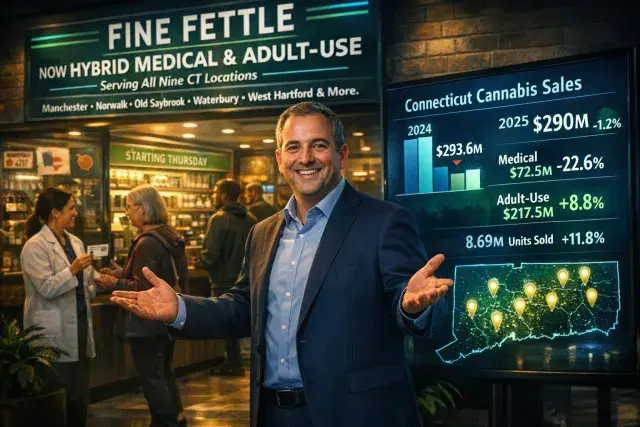
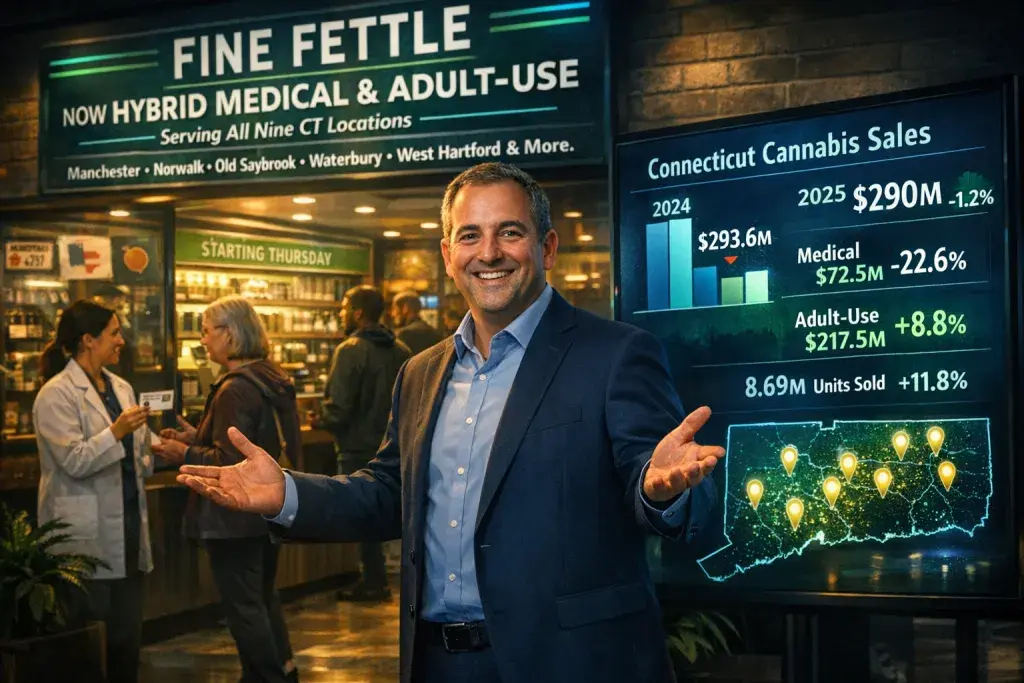
Starting Thursday, Fine Fettle will transform all nine of its Connecticut cannabis dispensaries into hybrid operations, seamlessly serving both registered medical marijuana patients and adult-use customers. This shift, enabled by recent state regulatory updates, addresses gaps in medical access while bolstering the state's evolving cannabis market amid shifting sales dynamics.
Regulatory Changes Drive Dispensary Conversions
Connecticut's updated cannabis regulations now permit recreational retailers to function as hybrid dispensaries, a move that Fine Fettle has swiftly adopted. Previously, five locations in Manchester, Norwalk, Old Saybrook, Waterbury, and West Hartford operated solely for adult-use customers. The remaining four sites were already hybrids. Fine Fettle's COO, Benjamin Zachs, emphasized the need for equitable access: “Patients shouldn’t have to travel far for care or be stuck with limited options.” This expansion reflects a broader industry trend toward integrated models that prioritize patient convenience without compromising recreational growth.
Declining Medical Sales Amid Adult-Use Surge
State data reveals a maturing Connecticut cannabis market, with total sales dipping 1.2% to $290 million in 2025 from $293.6 million in 2024, despite an 11.8% rise in units sold to 8.69 million. Medical marijuana sales plummeted 22.6% to $72.5 million, shrinking its market share from 32% to 25%, while adult-use sales climbed 8.8% to $217.5 million. These figures underscore how recreational legalization has cannibalized medical demand, prompting operators like Fine Fettle—active in Connecticut, Massachusetts, and Georgia—to hybridize for diversified revenue and sustained medical viability.
- Medical patients enjoy lower taxes, pharmacist consultations, and higher purchase limits.
- Physician certification and state registration remain requirements for medical access.
- Hybrid models could stabilize medical sales by enhancing regional availability.
Health and Access Benefits in a Hybrid Era
For medical patients, hybrid dispensaries mean fewer barriers to tailored cannabis therapies, which research links to relief for chronic pain, anxiety, and epilepsy—conditions increasingly validated by public health experts. Lower taxes and expert consultations reduce out-of-pocket costs and improve outcomes, countering the exodus to recreational channels. As Connecticut's market matures, this integration fosters a more inclusive ecosystem, potentially reversing medical sales declines by embedding clinical-grade services within everyday retail.
Implications for Connecticut's Cannabis Landscape
Fine Fettle's full hybrid rollout signals a pivotal adaptation in a post-legalization landscape where adult-use dominance challenges medical infrastructure. By bridging these worlds, the company not only fortifies patient options but also positions Connecticut as a leader in balanced cannabis policy. Expect ripple effects: stabilized medical participation, enriched product diversity, and a blueprint for other states navigating similar tensions between recreational boom and therapeutic needs.