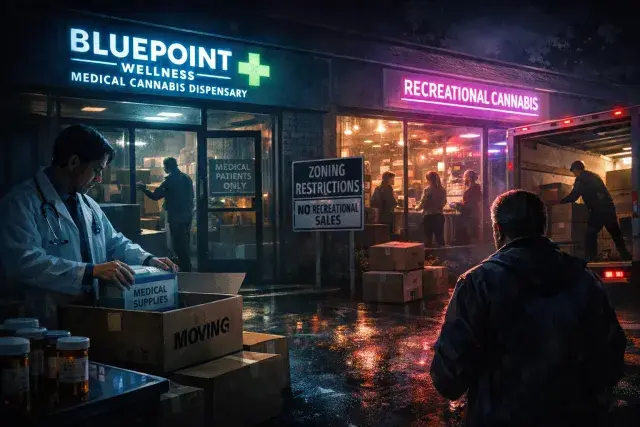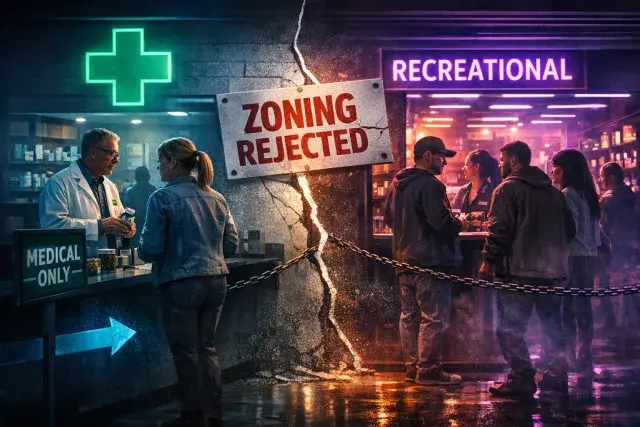
Ninety-seven applicants are still waiting. Rhode Island's Cannabis Control Commission held its first public meeting Friday since a federal judge's April 8 order abruptly halted the state's process for awarding 20 new retail cannabis licenses - a proceeding that had been close enough to completion that regulators were already coordinating with the Rhode Island Lottery on equipment and a physical location for the selection. The injunction, issued by U.S. District Court Judge Melissa DuBose, has frozen that work indefinitely while three federal lawsuits grind forward.
What the Court Actually Said - and Why It Stings
The legal question at the center of all three lawsuits is whether Rhode Island's residency requirement for cannabis license holders - which mandates majority ownership by state residents - violates the Dormant Commerce Clause of the U.S. Constitution. That clause, derived from Article I's grant of power to Congress to regulate interstate commerce, has long been read to bar states from enacting laws that discriminate against out-of-state economic actors. The plaintiffs, all out-of-state entrepreneurs, argue Rhode Island's rule does exactly that.
DuBose found there was a likelihood those arguments would succeed on the merits - the legal threshold required to grant a preliminary injunction. That finding is significant. It doesn't decide the case, but it signals where the court believes the law points. Two of the three suits were originally filed in May 2024 and dismissed by DuBose last February; the First Circuit Court of Appeals in Boston revived them in December, directing the lower court to rule on the substance rather than sidestep it. The state appealed DuBose's injunction on Tuesday, just hours after commissioners met behind closed doors.
Here's the catch: residency requirements for cannabis licenses aren't unique to Rhode Island. Several states enacted similar provisions in the early years of legalization, reasoning that local residents - who bore the brunt of prohibition-era enforcement - deserved first access to a new legal industry. Whether that rationale survives constitutional scrutiny is now a live question in federal courts across the country, and Rhode Island finds itself near the front of that argument.
Commission Walks a Narrow Line in Public
Friday's meeting was, by necessity, more about tone management than concrete action. Chief legal counsel Mariana Ormonde was direct about the constraints: anything said publicly could surface in litigation. That kept the commission's actual legal strategy off the table entirely.
Commissioner Robert Jacquard acknowledged the frustration plainly. Preparations for the lottery-style selection had already begun - the machinery of the process was in motion - and now it isn't. "That does not mean we are stopped from figuring out the best path forward," he said, though specifics of what that path looks like remain unresolved.
For applicants, the abstract legal proceedings translate into something more concrete: money spent, businesses on hold, supply chains in suspension. Sasha Gorski, a cultivator seeking a retail license in Providence, made the downstream effects clear. Cultivators are absorbing costs while the retail side of the market sits frozen. Every additional week matters.
A Former Mayor Offers a Way Out - Maybe
The most pointed suggestions of the day came from Allan Fung, the former Republican mayor of Cranston and one-time gubernatorial candidate, who now represents several retail applicants. Fung floated two potential off-ramps during public comment.
The first: reopen the application process entirely on a merit basis, stripping out any element that plaintiffs could argue confers an unfair geographic advantage. The second - and arguably more surgical - option: issue conditional licenses to the plaintiffs themselves. In federal civil procedure, mooting a case by giving plaintiffs what they're asking for is a recognized tactic; if the out-of-state entrepreneurs receive licenses, they lose standing to pursue injunctive relief. Whether that approach would actually dissolve the litigation or simply reshape it is a question for appellate attorneys, not a public comment period.
Jacquard asked Fung to submit his recommendations in writing. "They're very interesting, but take a while to absorb," he said - which, to be fair, is a reasonable thing to say about proposals that carry significant legal and political weight and were delivered on the fly.
The Longer Frustration Behind the Injunction
What the court ruling has done, in practical terms, is sharpen an existing grievance. Rhode Island legalized recreational cannabis in 2022. Four years on, the market's retail footprint remains constrained, and the commission's licensing rollout has drawn sustained criticism for its pace. The injunction didn't create that frustration - it compounded it.
Jason Calderon, a North Kingstown cultivator who applied for a retail license, was measured after Friday's meeting. "The explanation was perfect," he said. "At least it lets us know where we are." That's a low bar for satisfaction, and the fact that it was cleared speaks to how little concrete information applicants have had to work with.
The commission's immediate task is the appeal. Beyond that, the broader question - whether state-level cannabis residency requirements can survive federal constitutional review - may ultimately require either a legislative fix, a settlement framework, or a definitive ruling from the First Circuit. None of those outcomes are fast. For 97 applicants still in limbo, that's the part that's hardest to absorb.