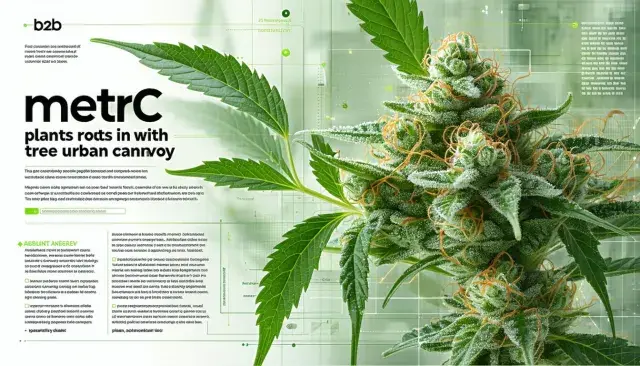
As Metrc deepens its footprint in New York's regulated cannabis market, the seed-to-sale tracking company is putting money into the city's green infrastructure - specifically, a partnership with the New York Restoration Project to expand the urban tree canopy across all five boroughs. The move is part of a broader sustainability program the company has been building across its U.S. operations, and it positions Metrc's market entry in New York as something more than a compliance contract win.
What the New York Restoration Project Actually Does
The New York Restoration Project is a nonprofit with a track record that's hard to argue with. Over its history, the organization has planted more than 200,000 trees across the city, restored more than 300 acres of parkland, and now stewards over 80 acres of green space - operating community gardens and working directly with neighborhoods that have historically had less access to parks and open land. That's not a brochure number; it's documented work embedded in some of the city's most densely populated and underserved communities.
Urban tree canopy work tends to get filed under "nice to have" in municipal budgets - which is exactly why private investment from corporate partners matters. Trees in dense urban environments reduce surface temperatures on sidewalks and in parks, manage stormwater runoff, and improve air quality. For New York City, where heat islands form reliably in low-canopy neighborhoods every summer, this isn't aesthetic. It's infrastructure.
Michael Johnson, CEO of Metrc, framed the partnership plainly: "As we continue to invest in the New York market, we are proud to contribute to growing urban canopy across the five boroughs, helping cool sidewalks, parks and streets for residents and visitors." That's a specific operational description of what tree canopy actually does - not corporate boilerplate about giving back.
Where This Fits in Metrc's Sustainability Record
The New York investment isn't Metrc's first move in this space. Last year, the company donated 5,000 trees to One Tree Planted to support recovery in communities hit by natural disasters - a contribution timed around Arbor Day. More operationally significant, from a supply chain standpoint, are the product-level changes Metrc has made to its compliance hardware.
The company has rolled out redesigned tags that reduce plastic use by 30%, a change the company says is expected to divert 185,000 pounds of waste from landfills while cutting roughly 295 metric tons of CO2 annually. It also replaced anti-static pink bags with brown paper packaging, removing approximately 300,000 plastic bags - close to 11,000 pounds of plastic - from the supply chain each year. That's not a rounding error. For a company whose physical tags touch virtually every cannabis plant and product batch in the states where it operates, material choices have real cumulative environmental consequences.
Metrc has also worked with Resource Innovations, an environmental consulting firm, to assess its business across energy, waste, water, and greenhouse gas emissions. Bringing in an outside firm to do that analysis is a different posture than internal reporting - it suggests the company is building toward measurable benchmarks rather than communicating in the direction of sustainability without accountability.
Why This Matters to New York Cannabis Operators
New York's licensed cannabis market is still finding its footing. The rollout has been slow and contested - operators have faced regulatory complexity, licensing delays, and the persistent challenge of unlicensed competition eating into their customer base. For licensed dispensaries working to build consumer trust and community credibility, the vendors they rely on for compliance infrastructure carry reputational weight too.
Seed-to-sale tracking systems like Metrc's sit at the core of a licensed operator's compliance architecture. Every plant tag, harvest batch, inventory adjustment, and transfer manifest that flows through a dispensary's POS system and back-office compliance logs connects to the state's tracking requirements. When operators are evaluated by regulators, the integrity of that data trail is non-negotiable. The vendor providing that infrastructure is not a neutral party - it's an operational partner.
In that context, a compliance technology company investing in the community where it operates isn't just a feel-good story. It signals how the company sees its presence in a market - and in a state as politically and environmentally conscious as New York, that positioning matters to operators who are themselves under pressure to demonstrate community investment as part of social equity and licensing requirements.
The thing is, sustainability commitments in regulated cannabis aren't just external communications. As the industry matures and institutional attention increases, environmental and social governance factors are likely to become part of how vendors, operators, and eventually regulators evaluate business conduct. Metrc appears to be building toward that standard - methodically, and with tangible numbers attached.